Green chemistry education is a worldwide movement. The educators, researchers, and students working to make chemistry safer and more sustainable are based in Brazil, Germany, Canada, and dozens of other countries.
But when the Green Chemistry Teaching and Learning Community (GCTLC) launched, its platform was English-only. For a community built around global collaboration, that was a gap worth closing.
About GCTLC and the People It Serves
GCTLC is a Drupal-based learning platform built by Skvare for Beyond Benign, a nonprofit dedicated to transforming chemistry education. The platform brings together K-12 teachers, university faculty, students, and industry professionals to share lesson plans, green lab experiments, and curriculum resources.
The community is genuinely international. The Green Chemistry Commitment, Beyond Benign's flagship program for higher education, has signatories from the UK, Germany, Brazil, Australia, South Africa, and beyond. Active partnerships aim to reach 4,000 faculty members and roughly one million students annually across 175 institutions worldwide.
When your users span dozens of countries and languages, English-only access creates a real barrier.
The Solution: GTranslate on Drupal
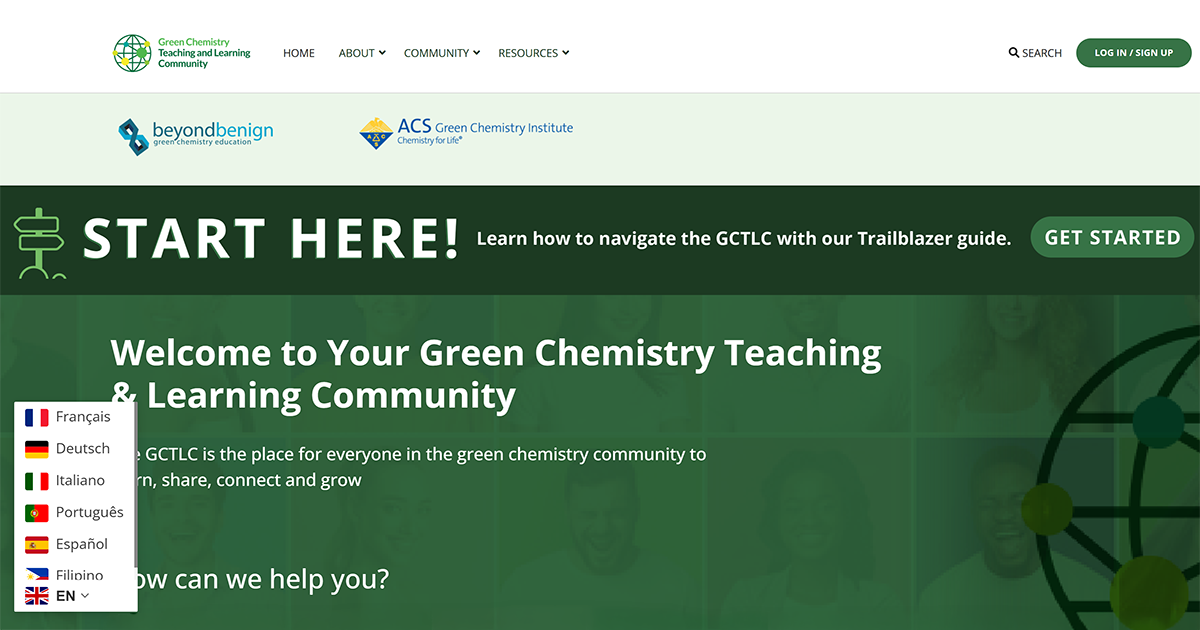
We installed the GTranslate module on the GCTLC Drupal site. GTranslate uses Google Translate to make your site available in over 100 languages. It drops a language-switcher widget onto the page. Visitors can select their preferred language and immediately see the content translated.
For GCTLC, we configured six languages alongside English:
- French
- German
- Italian
- Spanish
- Portuguese
- Filipino
These languages reflect where GCTLC's existing and growing user base is concentrated.
The module itself is lightweight: no heavy JavaScript dependencies, lazy-loaded flags for performance, and a clean dropdown display that fits naturally into the site's existing design.
One Tricky Part Worth Knowing About
Here's where it got slightly more involved.
GCTLC educators don't just read the platform. They actively contribute to it. They use forms inside the Drupal admin area to create and submit Learning Objects: the peer-reviewed lesson plans, lab experiments, and lecture materials that are the core of the library.
The challenge: GTranslate, by default, only attaches to the front-end theme. Admin-side forms use a separate theme in Drupal. Without an extra step, educators writing content in their native language couldn't get translation help on the very forms they need most.
The fix was straightforward once identified: place the GTranslate block in both the front-end theme and the admin (Claro) theme. After that, the translation widget worked everywhere it needed to, including the node create forms educators use to submit resources.
It's a small thing, but it's the kind of thing that matters. A French-speaking educator submitting a lesson plan shouldn't have to navigate an English-only interface to contribute their work.
Why This Matters for Mission-Driven Organizations
Language access isn't just a technical feature. It's a signal about who your platform is actually built for.
If your organization serves a global or diverse audience, an English-only site quietly communicates a narrower welcome than you intend. Translation tools like GTranslate let you extend your reach without rebuilding your content strategy from scratch.
For GCTLC specifically, multilingual support connects directly to the platform's stated values around diversity, equity, belonging, and respect. An educator in São Paulo or Berlin who can navigate the site in their working language is far more likely to move from reader to contributor, submitting resources, joining forums, and helping grow the community.
GTranslate is free to install and straightforward to configure. You don't need a large budget or a long project timeline to meaningfully expand who your site serves.
If you are planning improvements to your Drupal site, we can help.